CORPORAL LANDSCAPES, AN INTERVIEW WITH KRISTINA NAZAREVSKAIA
by Francesca Interlenghi
Kristina Nazarevskaia is a NYC-based contemporary artist. She was born in Armenia and raised in Russia and Ethiopia. Through various series, scales, and media, Kristina examines communication, spatial perception, and behavior, seen through the eyes of an outsider. Kristina’s photographs are an amalgamation of figurative and abstract forms, often inspired by Modern and Post War art, literature, cinematography, and sound. In addition to her corporal landscape and photo journalistic projects Kristina works as a dialect coach and a Unit Stills and BTS photographer on film and TV productions.
Francesca Interlenghi: I’d like to start at the beginning. How did you come to photography? And what training did you have?
Kristina Nazarevskaia: Photography surrounded me since childhood. My uncle, a film student at the time, was my earliest influence. I must’ve been four or five when a strip of 16mm film he was cutting snaked down on the floor where I was playing. I picked it up and instinctively held it up to the light. I saw inverted shapes, a nude, slowly progress from frame to frame. Thinking about it now from the “pedestal” of an Art Historian, I joke that it was my very own expansion of Duchamp’s “Nude Descending a Staircase”.
Later I would beg my father to take pictures. Not because I wanted to be photographed (I still dislike being in front of the camera), but because printing them was the most exhilarating experience I could imagine. I was 7. I trembled with excitement as the red bulb replaced the usual one, the light came on, trays were arranged, paper laid out (mind the fingerprints), the enlarger set up, and tongs arranged like surgical instruments. All in the smallest bathroom in Yerevan. I froze in anticipation each time shapes began to appear in that liquid. And yes, I still have most of the photos we printed. So, it wasn’t so surprising that I was the first in my class to get a camera and take photos. They weren’t any good…
Years later I was admitted to one of the most competitive film schools in the world: the NYU film school and later got a degree in art history. I taught myself to paint learning by looking and understanding what I liked and what I didn’t. What and who came before me, what triggered innovation, technical and theoretical, what stayed and what faded away and why. What has already been said and what needs to be explored further. I spent years in the studio creating large-scale abstract work influenced by Frankenthaler, Serra, Motherwell, Gorky, Albers. These paintings are in many private and corporate collections around the world. Many were featured in major Hollywood films and TV series. Yet, as confident as I was a painter, I never could call myself a photographer. My ex-husband had an eye. I still remember his extraordinary black and white travel photo essays. I would look at them and viscerally know that while his images sang and danced and pulled you in, mine were static and flat. All that changed 2.5 years ago. So, you see, I’m really a novice in this medium.
Francesca: How do you feel your practice has evolved during the years?
Kristina: I now know the basic building blocks of images. I see the frame. I know instinctively what needs to stay, what must be eliminated to allow the frame its own life. Sometimes the story is in the smallest detail. It’s there, it just needs to be identified. I am also not afraid to photograph people. Before, I would say that I took pictures of things that didn’t talk back. Now I want them to talk back! I want them to engage with me! What’s evolved is now I can photograph anyone, anywhere, anytime, anyhow. I can read the person and the location instinctively and make the image.
Plus, I am always experimenting. With every aspect of the medium. I have this internal confidence. After thousands of hours spent absorbing language (Eco, Lagerkvist, Auster, Saramago, Calvino, Cortazar, Dostoyevsky, Bulgakov, etc.), being able to feel the resonance of words, studying art history, understanding philosophy and theory, meaning of colors, their placement, being able to make meaningful visual references at will and knowing when to let an image be, because I am not yet at the level where I can see it. Painting taught me this particular patience.
Francesca: How would you describe your approach and attitudes?
Kristina: I watch and listen first. I watch for people’s movement, their plasticity, how they express emotions, their mimicry, freedom of movement, fluidity. I watch to see how they hide their fears. What makes them release their guard and exhale. How they respond to me and how close can I get and not invade their personal space. What happens if/when I do? Are they posing? I hate when people “pose”. I am not interested in a persona. I want to see you. And if I feel that the person trusts me then I will suggest a session. And even on the day of the shoot the energy may change. I’ve had days when creative energy just wasn’t there and we shot nothing. I looked and saw nothing. And that’s fine. I’d rather recognize this and let it be than force the shoot. Forcing something that doesn’t want to happen never produces anything good. If it’s meant to work – it will!
On the day of the shoot, I often let the person move, talk, feel the space until I catch the light (I shoot primarily with natural light) and then it’s: “Don’t move!” which rapidly devolves into an “aa-a” sound. Ask anyone I’ve shot with and they will tell you that within the first hour they learn my non-verbal cues. This happens largely because it’s important for me to show them what I’m photographing. What I see when I tell them to freeze in some strange position. They see what I see, and next time they see my head shake, or my chin move, or my finger go up, they hold the pose exactly as I want and know exactly why the finger, the shoulder, the neck has to stay there and not 2 cm down or up.
On a technical note, I am the outlier among my peers. I never shoot through the viewfinder – it’s always the back screen. I touch focus on the screen and shoot. More often than not, I shoot in black and white, switching to color just to check color temperature. I shoot in RAW and jpeg so I can preview all files and delete what I don’t want. I’ve had Nikons for the last 20+ years but made the switch to a Panasonic GH5 and for all its limitations, I love my baby. She was the tool that helped me reach this stage and I tend to carry her with me everywhere. Recently I got a Leica SL2. I often compare the experience to having driven a reliable Toyota for the last 20 years, only to, one day, be given the keys to a Bugatti. The Leica is lightyears ahead of anything else on the market today.

Francesca: Who influenced you the most?
Kristina: Someone, whom I can’t name. He knows who he is. I still remember the moment when the last piece of the puzzle was put into place and he quite literally showed me how to focus on what matters. I dedicated my first book of photographs to him.
Richard Serra is a huge influence on how I perceive movement and space. Same goes for Tony Smith. I have whole bodies of work informed by their sculptures. Roger Deakins, Andrei Tarkovsky, Pawel Pawlikowsky, Louis Malle, made the deepest imprints.
As far as other photographers go, I’d say Mona Kuhn, Richard Misrach, Sam Livm, Jeff Bridges’ incredible panoramic set stills, Adam Fuss, Alison Rossiter, I love Farrah Karapetian’s melting ice photograms, Margrethe Mather, O’Keeffe’s photographs, Berenice Abbott, Leon Levinstein, Helen Levitt, Gordon Parks, Laszlo Moholy-Nagy, Weston, the New York street photographers from the 60’s, 70’s, and 80’s,. There are some contemporary Japanese photographers I love. I also worked with and for AIPAD, the Association of International Photography Art Dealers for 6 years now, so I’m constantly looking at images.
Francesca: You have developed a distinct visual vocabulary that focuses on faces, bodies, gestures and postures. You offer significant examples of representations of the female body. Did that articulate itself from the beginning?
Kristina: Far from it. I was terrified of photographing people. My first attempt at overcoming this paralyzing fear was in Istanbul in 2003. I wandered the dusty back streets, with my Nikon F3, shielded from the gloss of shops and tourists, and took pictures of local people. Kids were my favorite subjects. Candid, honest, direct, unposed, natural, theirs were my first portraits.
My first photo session that focused exclusively on a female form was a year ago with a friend, a kind and an extraordinarily trusting human being, who was going through a personal transformation. A month later I invited another friend for a session and that too opened new creative doors. We shot for hours in a tiny space in my kitchen where light is always extraordinary.
One more impromptu session in Mexico and I landed into quarantine. To keep myself sane I decided to just keep taking pictures. It was, in a way, a rehearsal for when I’d be able to photograph others again.
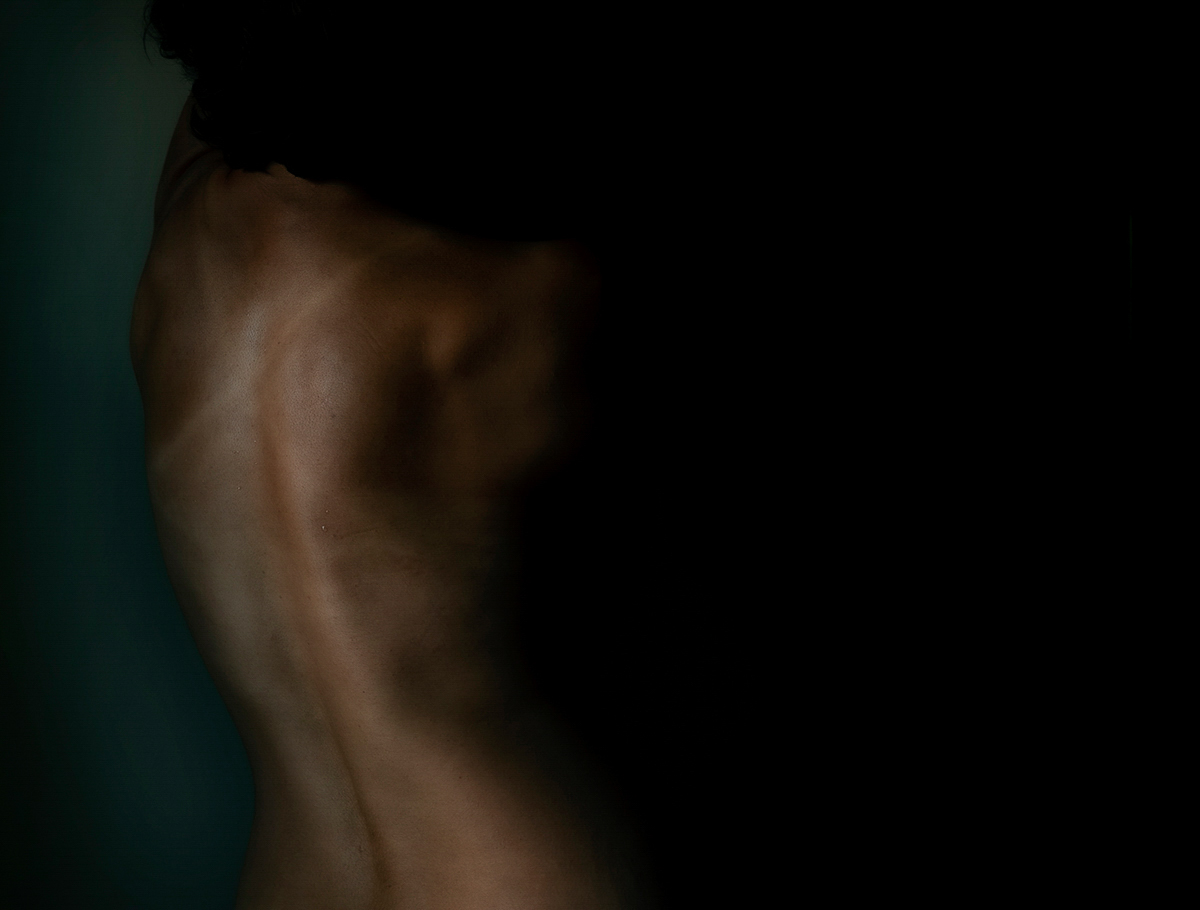
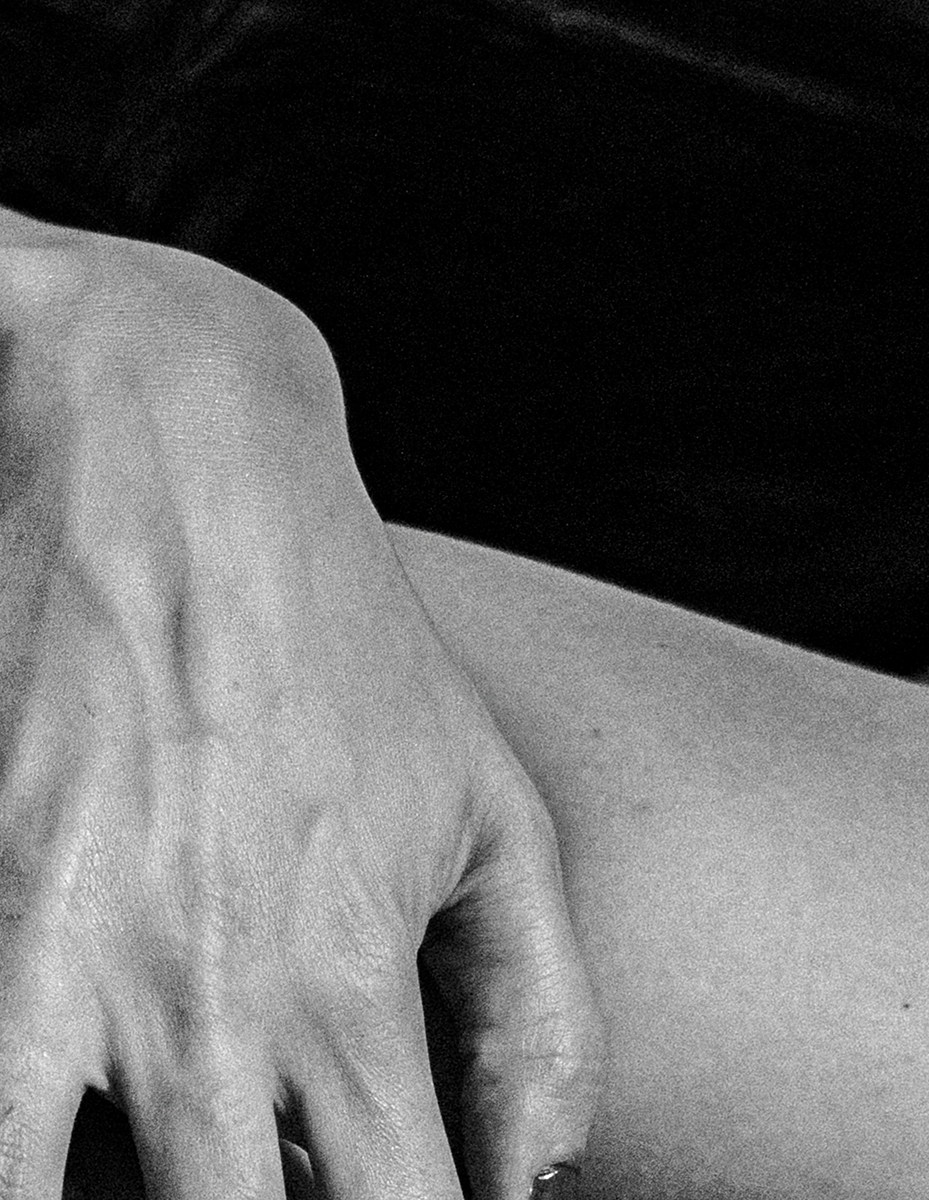
I have to say that each session creates its own path. I never know what I will shoot with that person or how. I just let it happen and I usually take it from there. No two people have brought the same energy to a shoot. Even when I photographed someone for the second time, the experience was always different. Also, I rarely photograph someone’s face. Partially because of my concerns for privacy, online and off. I am very aware of all kinds of technological advances that can identify people in the virtual world and that that information never disappears. I choose to allow my models anonymity. Speaking from a conceptual POV, our face, our eyes demand that we focus on them. We are conditioned to do so without thinking. I want to pull you away from focusing on the expected. I want you to learn to see how and what I see.
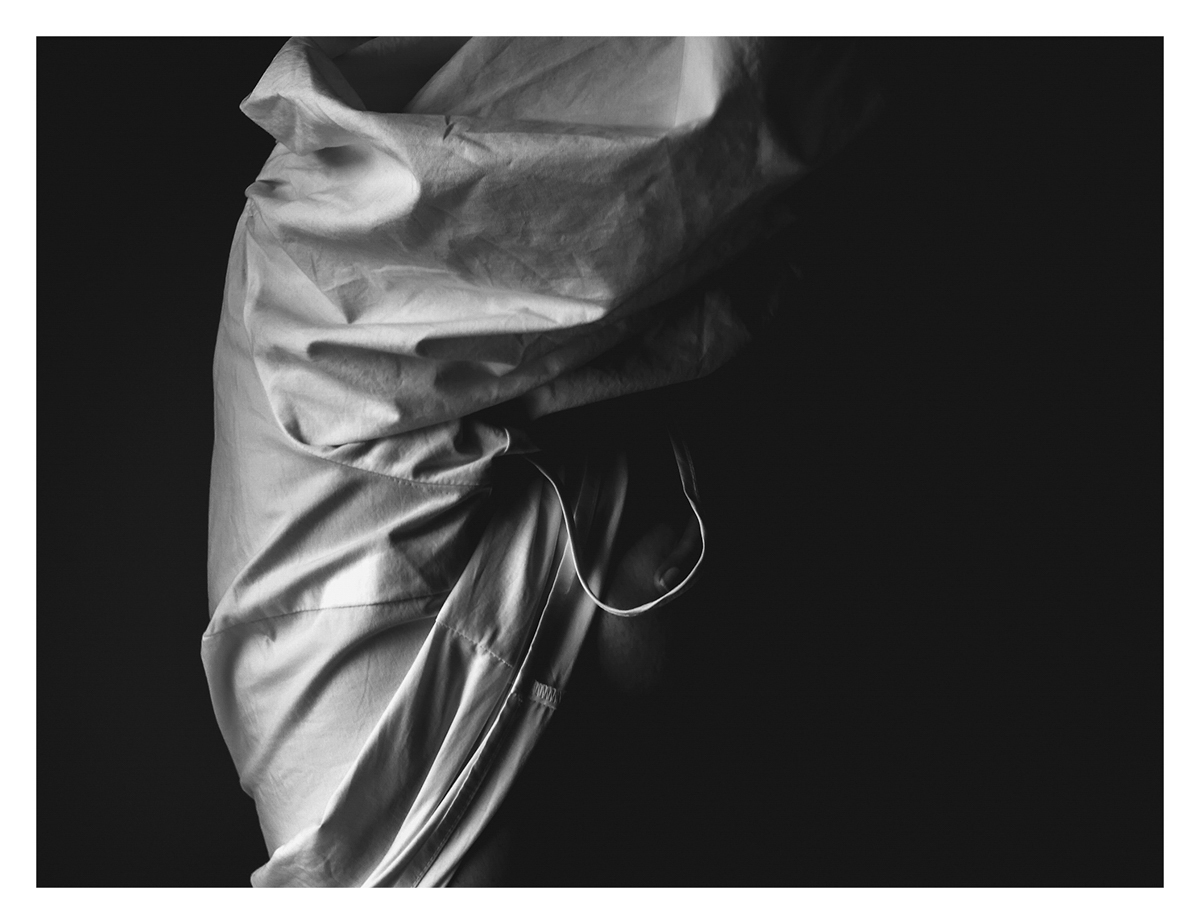
Francesca: Your images sound like meditation on lost intimacy. They are delicately balanced by dark drama and sophisticated glamour. Can you tell me more about your process of working?
Kristina: “A meditation on lost intimacy.” I’ve not heard this before, but it is 100% true. I will have to contemplate that … but, yes, it’s true. There is a deep sense of melancholy in my work. Something genetic, perhaps? Armenians often say that their ancestors’ sorrow and suffering were permanently imprinted on future generations. That every Armenian carries a deeper sadness in their soul.
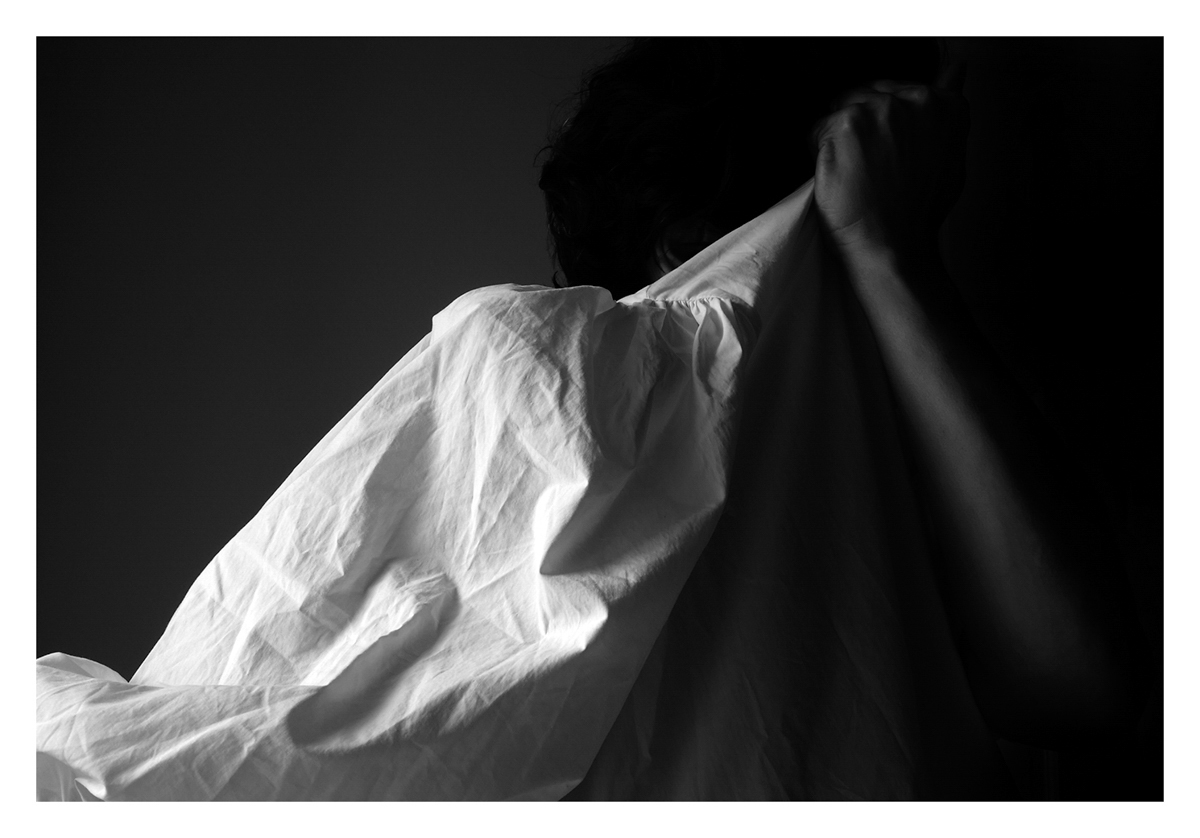
As far as the actual frame goes, I intentionally and very consciously shift my perspective to see the body as if it were a sculpture. (Albeit I don’t fall in love with my Galateas). I draw and shape the frame with their forms to abstract the familiar and force a re-examination of every element you think you know. I am not interested in sexualizing the body. I am not looking at it as “naked”, but as “nude” and that’s an important distinction. Just ask all those “critics” who frothed with indignity at Manet’s Olympia. My work recognizes the sensuality and the beauty of the human form but my interest instead lies in geometry, finding and amplifying surface tensions, drawing attention to texture, density of blacks and whites, shapes, and manipulating perception. All the things I used to do in my painting I am now doing with my camera.
Francesca: Do you have any upcoming projects?
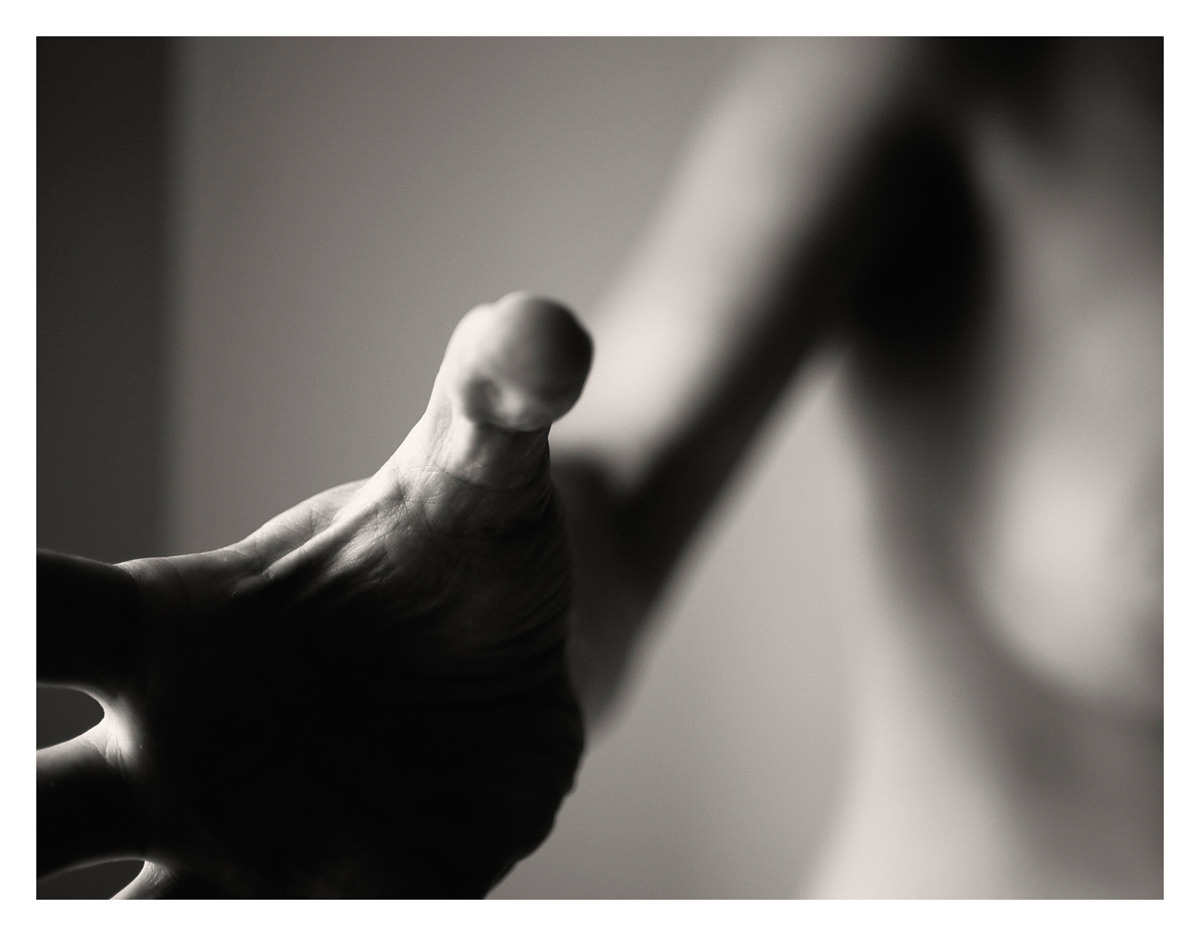
Kristina: I published two books of photographs this summer. The first is a collection of still lives taken during quarantine in NYC, titled Soliloquies – a word that seemed most appropriate for the experience of spending endless weeks of lockdown in solitude. The book is dedicated to my father who died at the end of April.
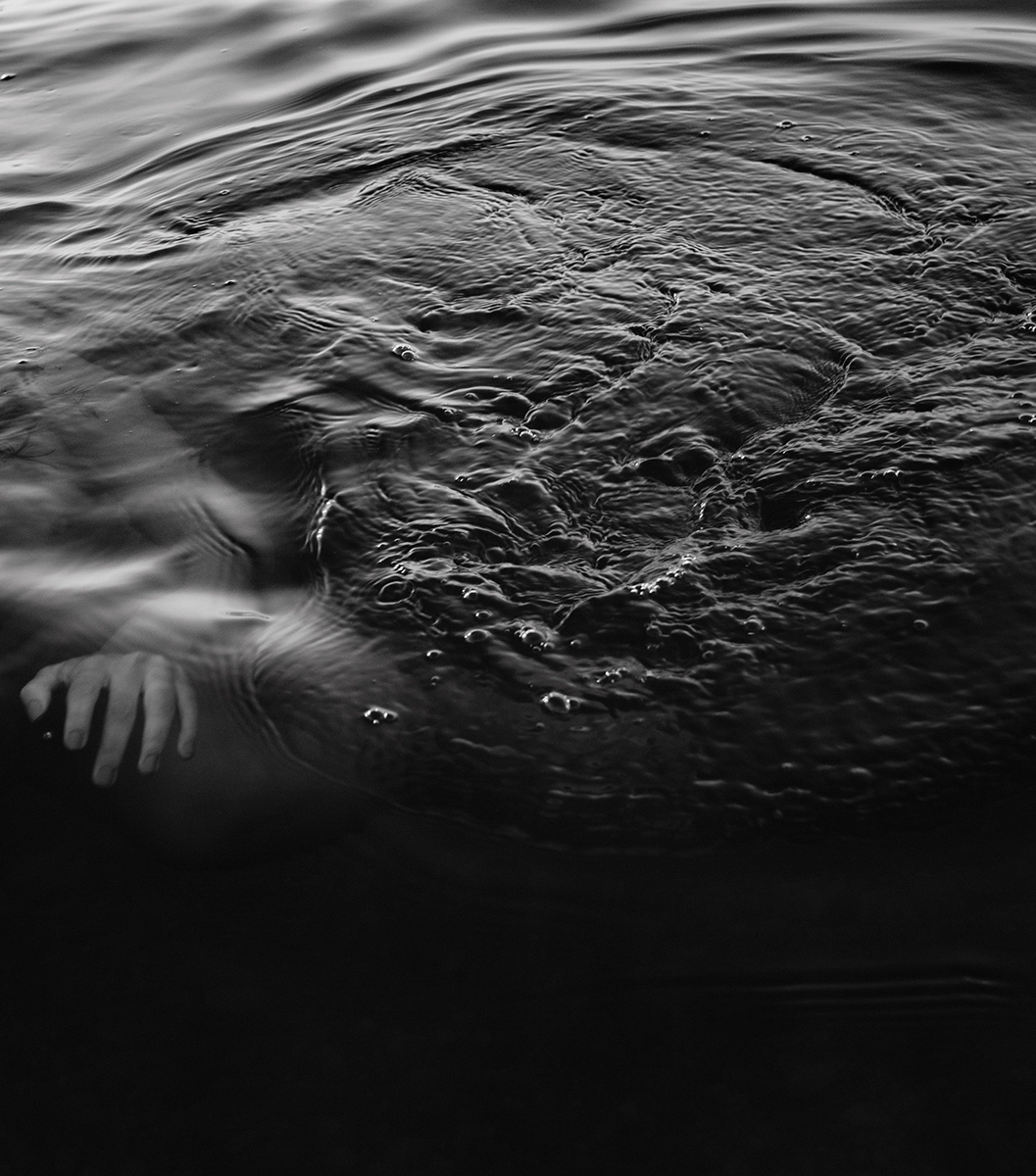
The second book is titled Private and that’s the first tome of my corporal landscapes, as I refer to them. The book is a love letter. It combines portraits, self-portraits and images of nature. Each combination tells a different story. Some are shy, some hum, others pound and scream, some flow and take you with them… My hope for these images is to continue evolving on their own. 5, 10, 20 years from now I want them to be telling new stories independently of me.
Ever since the first Private book came out, I’ve been working on volume II. So far, it’s 170 pages and counting. I just wrapped a session with a couple and have three more shoots coming up with people I met on Instagram and one in a store in NY. If I’m not careful, it’s going to end up being 300 pages! I think I’ll call it “Stai Ferma”.
Original interview in Italian and English can be found here.
Order your copy of STAI FERMA
Order your copy of PRIVATE
For autographed copies please message Kristina here or on her Instagram page.